
Building scalable web applications is no longer optional—it’s a necessity for startups and enterprises aiming for long-term digital success. Whether you’re launching a SaaS platform or an enterprise-grade system, scalability ensures your application performs seamlessly under increasing user demands.
At DB CodeCraft, we specialize in developing high-performance applications using modern technologies like React, Node.js, and WordPress. In this guide, we’ll explore proven strategies to build scalable systems that grow with your business.
Why Scalable Web Applications Matter
Scalable web applications allow your system to handle increased traffic, data, and user interactions without performance degradation. This is critical for businesses expecting growth or unpredictable traffic spikes.
1. Choose the Right Architecture for Scalable Web Applications
Start with a solid architecture. Microservices architecture allows independent scaling of services, while monolithic systems may struggle under heavy load.
Learn more about scalable architectures from
AWS Architecture Center.
2. Optimize Database Performance
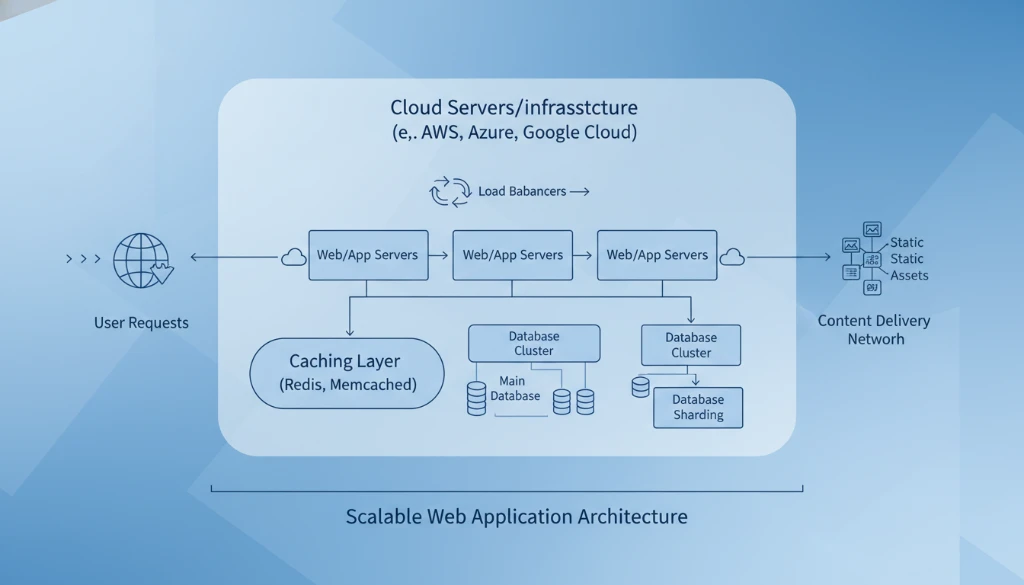
Database bottlenecks can cripple scalable web applications. Use indexing, caching, and database sharding to improve performance.
3. Implement Caching Strategies
Caching reduces server load and improves response times. Tools like Redis and CDN caching play a crucial role in scalable web applications.
4. Use Load Balancing
Distribute incoming traffic across multiple servers using load balancers. This ensures no single server becomes a bottleneck.
5. Leverage Cloud Infrastructure
Cloud platforms like AWS, Azure, and Google Cloud offer auto-scaling features that dynamically adjust resources based on demand.
6. Write Efficient Frontend Code
Using frameworks like React ensures efficient rendering and better user experience. Code splitting and lazy loading also enhance scalability.
Explore our web development services for scalable solutions.
7. Monitor and Optimize Continuously
Use monitoring tools like New Relic or Datadog to track performance and identify bottlenecks in real-time.
Conclusion
Building scalable web applications requires a combination of the right architecture, tools, and continuous optimization. By implementing these strategies, you can ensure your application remains fast, reliable, and ready for growth.
If you’re looking to build scalable web applications tailored to your business, visit our
contact page today.